Average Reviews:

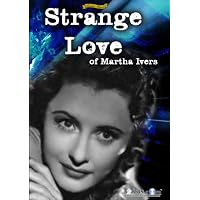
(More customer reviews)Are you looking to buy Strange Love of Martha Ivers (1946)? Here is the right place to find the great deals. we can offer discounts of up to 90% on Strange Love of Martha Ivers (1946). Check out the link below:
>> Click Here to See Compare Prices and Get the Best Offers
Strange Love of Martha Ivers (1946) Review
Some people call this a noir, and a good one. Some call it a psychological study of guilt. I think it's a melodrama, but a well-crafted one. What moves it from noir to melodrama for me is that there are two weak motivating actions for the plot; the first (the death of the aunt) doesn't have enough power to justify the drama, and the second (a conviction of an innocent man) is barely mentioned until the end of the movie.Sam Masterson (Van Heflin) is driving west when he decides to go through Iverstown. He has a car accident and has to stay in town until his car is fixed. He meets a young woman, Toni Marachek (Lizabeth Scott), just out of jail and on probation for a crime she wasn't guilty of. Sam decides to go to the district attorney to see if he can help her. Years before as young kids, Sam and the DA, Walter O'Neil (Kirk Douglas), were sort-of friends, tied together by their friendship with Martha Ivers (Barbara Stanwyck).
Now O'Neil is married to Martha. He's running for re-election. Martha inherited Ivers Industries and is the wealthiest woman in town. She's a force to be reckoned with. She inherited millions when her aunt fell down a flight of stairs 18 years ago...the night she and Sam were planning to run off, when Walter was in the house with her and Sam. Her aunt (Judith Anderson), a rigid, disapproving, condescending woman, fell with the help of a crack on the head from a cane wielded by Martha. A few years later a man was hanged for the crime, prosecuted by Walter with testimony from Martha. They married and now live a loveless life, with Walter still the uncertain and sometimes scared child he used to be and Martha a controlling woman. Walter drinks heavily and Martha is contemptuous of him. Now Sam is back, innocently, but Walter in particular is convinced Sam is out to shake them down. "He's a gambler, a sharp shooter, an angle boy," he says to Martha. "They come through my office by the hundreds. Couldn't you see blackmail in his eyes?"
Things quickly spiral down into a morass of misunderstandings, guilt, what might pass for love, and temptation. Walter loves Martha. Martha loves Sam. Sam loves Toni but is tempted by Martha. Toni loves Sam. All is resolved one night in the Ivers' mansion with Martha, Walter and Sam playing out a potentially murderous triangle. But it's 1946, and with the Production Code in place there's little doubt which two people will die and which person will survive as a wiser man. When Martha urges Sam to kill Walter so that they can be together, Sam puts his finger on it. "Martha,' he says, "you're sick...in your mind, I mean, that's where you're sick...so sick you don't even know the difference between right and wrong."
The movie is beautifully photographed, for the most part the pacing is good, the establishment of the three leads' personalities as children is excellently carried over into the performances and personalities of the three as adults. Unfortunately, the death of the aunt just doesn't seem to be a strong enough element to justify all the angst. The aunt was in the process of beating Martha's cat with her cane on the stairs when Martha grabbed the cane and struck her aunt. Any half-way competent lawyer would have been able to get a young heiress off without relying on Martha coming up with having seen a large burglar running from the house. This makes what follows, even with Martha's intensity, seem out of proportion. Some of the dialogue, especially that given to Stanwyck and Douglas, is solid and uneasy...or maybe it's their expert line delivery. But a good deal of the words Heflin and Scott have to say can sound artificial. "They said they wouldn't hurt you," Toni says to Sam when she tries to explain why she helped set him up for a beating. "No more parole, they said, if I went for it. I'd draw the whole five, they said, if I didn't. I went for it. Go ahead and hit me, Sam. I've got it comin.'" Sam looks at her questioningly...then tenderly. "The one thing you've got comin', kid, is a break."
Even so, as melodrama it's fun to watch. Barbara Stanwyck and Van Heflin do nice jobs, and Kirk Douglas makes a strong impression. He may be playing a weak drunk, but you look at him while he's on screen.
The DVD picture is in great shape. If you buy this movie, be sure you get this Paramount version. There are a large number of other public domain versions out which look terrible. There are no extras.
Strange Love of Martha Ivers (1946) Overview
In 1928, young heiress Martha Ivers fails to run off with friend Sam Masterson, and is involved in fatal events. Years later, Sam returns to find Martha the power behind Iverstown and married to ""good boy"" Walter O'Neil, now district attorney. At first, Sam is more interested in displaced blonde Toni Marachek than in his boyhood friends; but they draw him into a convoluted web of plotting and cross-purposes.Want to learn more information about Strange Love of Martha Ivers (1946)?
>> Click Here to See All Customer Reviews & Ratings Now

0 comments:
Post a Comment