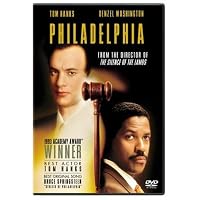
Average Reviews:

(More customer reviews)Are you looking to buy Philadelphia (1993)? Here is the right place to find the great deals. we can offer discounts of up to 90% on Philadelphia (1993). Check out the link below:
>> Click Here to See Compare Prices and Get the Best Offers
Philadelphia (1993) Review
I purchase a lot of DVDs. For the past few years, it seems that almost every DVD comes in a special edition two-disc release that includes deleted scenes, documentaries, cast bios, trailers, teaser trailers, music videos, and the director's recipe for three-alarm chili. I usually don't have time to get beyond the first disc, and much of what I do get around to usually turns out to be as boring as it gets. This time, however, I am happy to report that the two-disc anniversary release of Philadelphia is worth both the money and the time invested in it, even if you already have Philadelphia on DVD.The special features include the 84-minute documentary, One Foot On A Banana Peel and the Other In the Grave, an extraordinary piece of amateur filmmaking by an AIDS patient named Juan Botas. What I did not know was that Mr. Botas' AIDS diagnosis provided the inspiration for director Jonathan Demme to make Philadelphia in the first place, as Mr. Botas was best friends with Mr. Demme's wife. In the meanwhile, Mr. Botas mentioned to filmmaker Demme that it was a shame that the black humor, amazing courage and other interesting dialogue that emanated from his fellow patients at the clinic where he was being treated was being lost forever as it left their lips. Mr. Demme gave Mr. Botas his hand-held camera, and the results so impressed Demme that he wound up releasing the documentary through his own production company. The finished film is touching, oddly comic, tragic and as effecting as any piece of drama you've ever witnessed. One of the patients from the doctor's office was also given a few lines in the main feature, Philadelphia.
Which brings us to that film. At the time of its release, Philadelphia received some very harsh criticism from the AIDS community for its perceived flaws; it was judged by many as "too Hollywood" to be realistically representative of the HIV / AIDS experience. To their credit, in the background documentary included here, "People Like Us" (which was the original working title of Philadelphia) the creative team behind Philadelphia (including Jonathan Demme, Tom Hanks and the screenwriter Ron Nyswaner) meet this criticism head on, presenting a defense of their work that is both credible and illuminating. Many complained that Philadelphia was void of any tenderness or physical contact between the male couple (Hanks and Bandaras) but this is not only redressed by a closer look at their scenes together, an extremely intimate scene between the lovers in bed (which was excised from the final cut) was deleted not for its controversy but because the scene simply didn't work (having now seen it, I can attest to this fact). I have long seen this movie as not a film about AIDS per se, but as a film about homophobia. Indeed, the main thrust of the plot (besides the trial) is the transformation of the character of Joe Miller from committed homophobe to a more enlightened and tolerant person. One of my favorite scenes (which it turns out many people wanted to delete from the final cut) deals subtly with Millers transformation - the "opera scene".
In that scene, Miller is asked by the character or Andy what he thinks about gay people. The attorney responds that, when straight people think of them at all, most straight people pretty much see all gay people as some sort of sub-human predatory monsters, out to ensnare the children of the world into a twisted sick life, and destroy all that straight people hold dear. Andy abruptly changes the subject, "Do you like opera, Joe?" he asks. Caught by surprise, Joe admits he does not know anything about it - and Andy Beckett - this sub-human destroyer of children, responds by tenderly and passionately explaining his deep love for beautiful music by allowing Joe to see just a small piece of exactly why so many gay men love opera. He plays the aria La Mama Morte, carefully, passionately and articulately explaining the story and the beauty behind the words and music. Joe is immediately transformed - it's clear that he is deeply moved. By playing the piece, La Mama Morte through again in its entirety, the screenwriter and director shows us that the music has stayed with Joe long after he's left Andy's home. We see him leave Andy's apartment and go home in a sort of daze, kiss his sleeping baby and slip into bed with his slumbering wife, while the beauty of the music haunts and caresses him, like a gorgeous gay lullaby. Some of my gay friends were among those who didn't get this scene - they saw it only as a stereotypical depiction of a gay man's love for opera. I got it right away - by exposing Joe to a thing of beauty he'd never experienced before, Andy had suddenly allowed Joe to consider that gay men were not only something more than what he thought, he demonstrated that we are capable of enormous passion and the ability to appreciate delicate beauty. This scene, more than any other, allowed Andrew Beckett to be transformed from a predatory sub-human freak into a human being, not only for Joe Miller, but for many in the straight audience. It has remained one of my favorite scenes in a movie ever, and a small part of what makes Philadelphia such a powerful experience.
Highly recommended.
Philadelphia (1993) Overview
PHILADELPHIA - DVD MovieWant to learn more information about Philadelphia (1993)?
>> Click Here to See All Customer Reviews & Ratings Now

0 comments:
Post a Comment